
ICD-10 Code for Hematochezia: Diagnosis, Documentation & Billing Guide
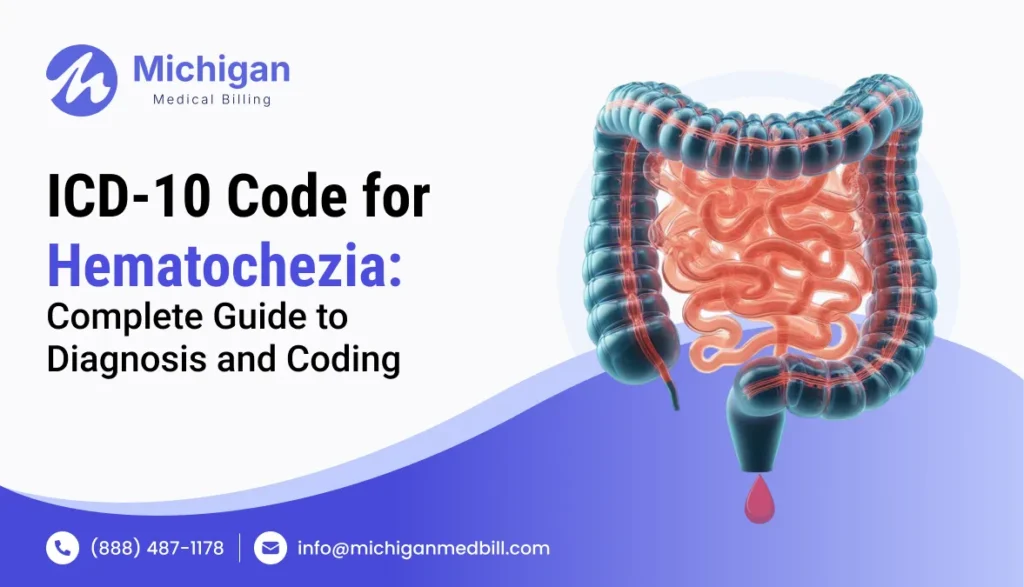
Accurate coding of hematochezia is essential for proper reimbursement, medical necessity validation, and ICD-10-CM compliance. Proper medical necessity documentation can also help support diagnostic procedures and reduce potential claim issues. The ICD-10 Code most frequently used for Hematochezia is K62.5 – Hemorrhage of anus and rectum if supported by medical documentation of bleeding from the rectum or anus without any cause being found. Hematochezia is a symptom, not a diagnosis. Code selection is based on provider documentation, the reason of the bleeding and if an underlying ailment such as hemorrhoids, diverticular bleeding, inflammatory bowel disease or colorectal disease has been detected. This guide will review hematochezia coding requirements, relevant ICD-10-CM codes, CPT considerations, documentation best practices and billing methodologies to assist healthcare professionals and coding teams in maximizing accuracy and preventing claim issues. What Is Hematochezia? Hematochezia is the passing of bright red or maroon colored blood from the rectum. Patients may report this as seeing blood on the toilet paper, blood on the stool, blood mixed in the stool, or blood separate when they go to the bathroom. Lower GI bleeding is commonly accompanied by hematochezia; however, the source may be unknown. The bleeding could be caused by: Anal canal Rectum Colon Distal small intestine Occasionally the upper gastrointestinal tract when bleeding is rapid Hematochezia is a finding that should be investigated from a clinical point of view, not a final diagnosis. The symptom does not specify the reason. The common conditions related with hematochezia are: Piles (internal or exterior) Anal fissures Diverticulosis with hemorrhage Colorectal polyps Colorectal malignancy Ulcerative colitis Crohn’s disease Infectious colitis Angiodysplasia Rectal ulcers Ischemic colitis The documentation of hematochezia should therefore describe the clinical details surrounding the bleeding rather than only stating “blood in stool.” For example: Limited documentation: The patient is passing blood per rectum. This remark does not specify if the patient has apparent rectal bleeding, occult blood, melena, or something else. Improved documentation: Patient reports intermittent bright red blood per rectum for two weeks, primarily noted after bowel movements, with no associated melena. This provides more useful information for diagnosis selection, medical necessity review, and coding accuracy. ICD-10 Code for Hematochezia: Primary Coding Guidance What Is the ICD-10 Code for Hematochezia? The commonly reported ICD-10 Code for Hematochezia is: ICD-10-CM Code Description When It Is Commonly Used K62.5 Hemorrhage of anus and rectum Rectal bleeding or hematochezia documented without a confirmed underlying cause K92.2 Gastrointestinal hemorrhage, unspecified GI bleeding documented without a specific source identified K92.1 Melena Black, tarry stool caused by gastrointestinal bleeding R19.5 Other fecal abnormalities Abnormal stool findings such as positive occult blood testing The most appropriate diagnosis code depends on the provider’s documentation and the clinical situation. Understanding K62.5 – Hemorrhage of Anus and Rectum K62.5 – Bleeding of Anus and Rectum – All You Need to Know Hemorrhage of anus and rectum is specified by code K62.5 in the ICD-10-CM. Some of the phrases which may be linked to Hemorrhage of anus and rectum are: Hematochezia Bright red blood per rectum (BRBPR) Rectal bleeding Anal bleeding Rectal hemorrhage The code applies when bleeding is documented as originating from the anus or rectum and no more specific diagnosis explains the bleeding. When K62.5 may be appropriate: Example 1: Provider documentation: Patient presents with bright red blood per rectum. Colonoscopy planned to determine source. Possible ICD-10-CM: When K62.5 Should Not Be Used Example 2: Provider documentation: Intermittent painless rectal bleeding. No evidence of hemorrhoids or other identified source. Possible ICD-10-CM: K62.5 – Hemorrhage of anus and rectum However, coders should avoid assigning K62.5 when the provider documents a confirmed cause. For example: Documentation: Hematochezia due to diverticular haemorrhage. The diagnosis should be changed to verified diverticular illness with haemorrhage rather than simply rectal bleeding. The Difference Between K62.5 and K92.2? One of the most critical coding judgments is whether the data supports a diagnosis of rectal hemorrhage or a more general gastrointestinal hemorrhage. K62.5 Hemorrhage of anus and rectum Use when documentation indicates bleeding from anorectal area. Examples: Rectal hemorrhage Anal bleeding Bright red blood per rectum Hematochezia documented as rectal bleeding K92.2 – Gastrointestinal Hemorrhage, Unspecified Use when the provider documents gastrointestinal bleeding but does not specify the source. Examples: GI bleed Gastrointestinal hemorrhage Bleeding from digestive tract, source unknown A common documentation issue occurs when providers write “lower GI bleed” without clarifying the actual source. Coding teams may need additional documentation clarification because lower GI bleeding and rectal hemorrhage are not always interchangeable terms. The bleeding may pass through the rectum but originate elsewhere in the gastrointestinal tract. Therefore, coders should follow provider documentation rather than assuming the anatomical source. Documentation Requirements for Accurate Hematochezia Coding High-quality provider documentation is the foundation of accurate ICD-10-CM coding and clean claim submission. Although K62.5 – Hemorrhage of anus and rectum is commonly used for hematochezia, coders cannot assign diagnosis codes based only on patient-reported symptoms or assumptions about the bleeding source. The medical record must support the diagnosis documented by the provider. For hematochezia-related encounters, providers should clearly document the following elements: Description and Characteristics of Bleeding The provider should describe the type of bleeding rather than simply documenting “blood in stool.” Important documentation details include: Color of blood Frequency and duration Amount of bleeding Relationship to bowel movements Presence of clots Whether blood is mixed with stool or only present on wiping Examples of useful documentation: Less specific: Blood in stool. More specific: Intermittent pain in the rectum and bright red blood per rectum for 1 month. This amount of detail serves to establish the medical necessity of diagnostic examination and allows coders to select the most appropriate diagnosis. Location and Source of Bleeding Documentation should clarify whether the bleeding is believed to originate from: Anus Rectum Colon Gastrointestinal tract, unspecified Another identified source This distinction affects ICD-10-CM selection. For example: Documentation: Rectal bleeding secondary to internal hemorrhoids. The coding focus should be the confirmed hemorrhoid diagnosis if appropriately documented. Documentation: Bright red blood per rectum. Source unknown.